
What is aphasia and AAC?

Eva, our Clinical Content Specialist and SLT, shares how AAC can play a valuable role in helping people with aphasia stay connected, express themselves, and take part in everyday life. She also explores Aphasia Duo, a communication tool in our Grid AAC software, designed specifically with their needs in mind.
What is Aphasia?
Aphasia is an acquired language difficulty that is common after stroke, brain injury and some other types of conditions affecting the brain. It can affect any combination of speaking, reading, writing and understanding. This can make communication much more challenging.
It is estimated that in the UK there are over 350,000 people living with aphasia. Despite aphasia affecting many thousands of people, there is little awareness of this condition. This can add to the isolation that people with aphasia can experience.
People who have aphasia will usually work with a speech and language therapist to help improve their language difficulties. They might also be supported to work on compensatory approaches. This acknowledges that language and communication difficulties might remain, and aims to build on a broad range of skills to help someone communicate despite these challenges.
What AAC?
AAC stands for Augmentative and Alternative Communication, and this refers to anything that someone uses alongside or instead of their speech, to support communication.
AAC is helpful for many people. It is very underused with people with aphasia, but there is research to show that it can be really beneficial for people with both mild and more severe forms of aphasia. There is also no evidence to suggest that AAC deters the progression or recovery of natural speech.
Supporting people with aphasia with AAC
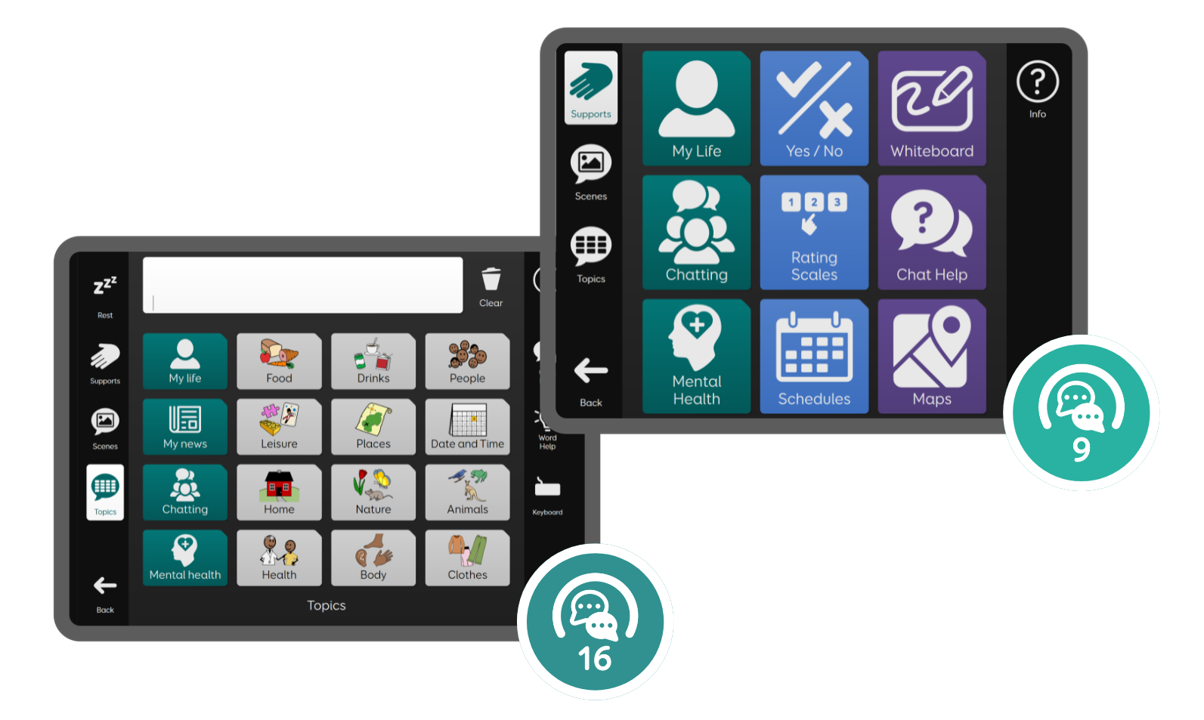
Aphasia Duo is AAC developed specifically for people with aphasia. It’s available on Grid and Grid for iPad software. It’s designed to be used by people with aphasia, in conjunction with their communication partners, to help them engage in meaningful communication and activities.
How can Aphasia Duo be helpful for someone with aphasia?
Social communication about interests, and during activities or situations
Experiencing communication difficulties can be challenging and, at times, upsetting, and some individuals may feel that they have lost independence or that other people speak for them.
Visual Scenes can be a great tool for people with aphasia to be able to participate in conversations and everyday activities. The Scenes grid in Aphasia Duo has space for a large photo, and related words and phrases around the edges. Ideally, the photo will be personalised to show the person with aphasia engaging in their activity, e.g. watching TV or ordering a coffee. This can help ‘cue’ related language. The phrases can also be personalised to what the person with aphasia wants to say.
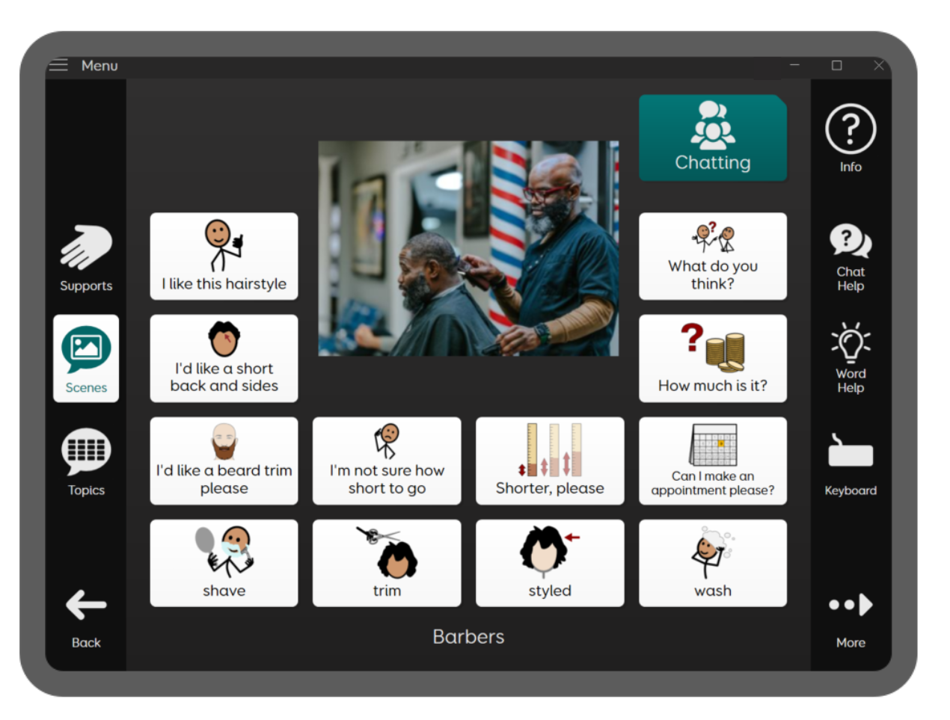
There are 60 pre-made scenes in Aphasia Duo for communication on a wide range of topics, from the environment to medical issues. We have also seen Aphasia Duo users create their own Scenes, including one for planning an upcoming holiday and one for communicating with their social worker.
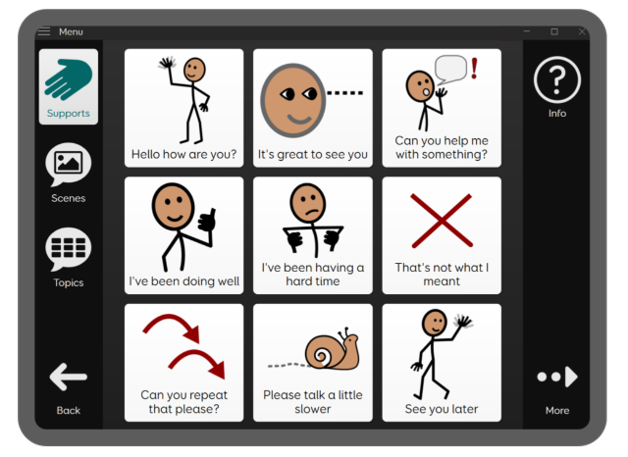
Chatting grids can be useful for communicating during a wide range of situations, and include phrases to greet, ask questions, respond, and rectify communication difficulties.
Repairing communication breakdown
People with aphasia can find it difficult to express their full message. They may only be able to share a single word, gesture, or drawing, even when they have much more they want to say. When that message isn’t understood, it can be frustrating for both the person with aphasia and their communication partner. The Chat Help grid in Aphasia Duo is designed to support communication in these moments, helping to problem-solve and work towards understanding together.
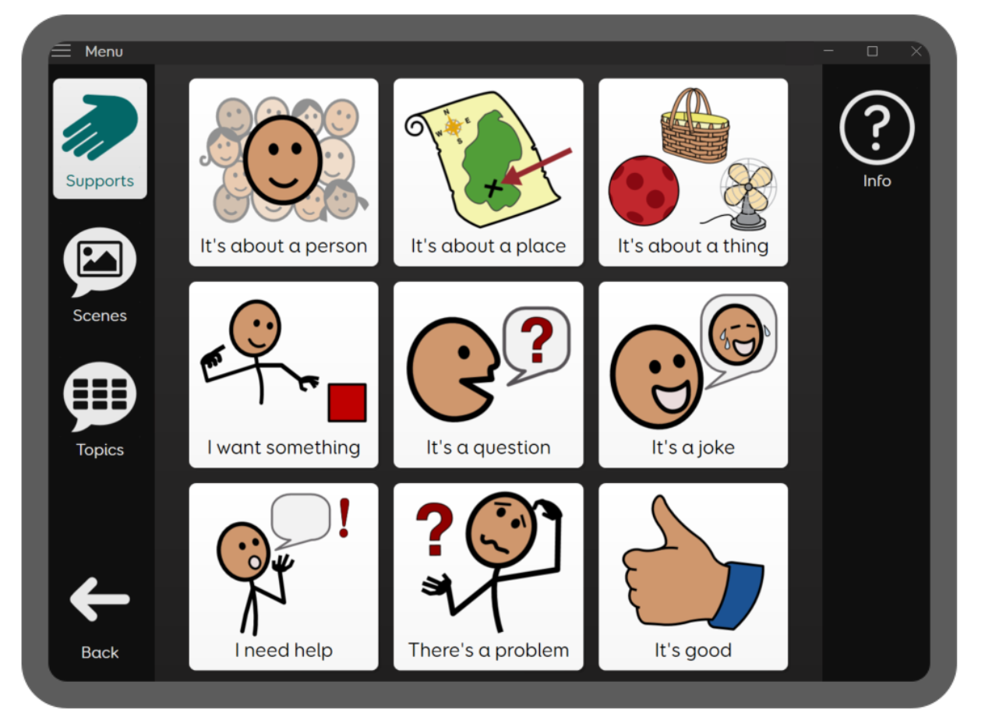
A communication partner can use these options to help narrow down what the communication reason is: is the person with aphasia asking a question, highlighting a problem, or are they telling a joke?
Strategies to find words
It’s common for people with aphasia to experience word finding difficulties – this means they have some knowledge of the word they want to say, but they struggle to say it aloud. The Word Help feature in Aphasia Duo offers a range of strategies to support communication when this happens. These approaches reflect techniques often used by speech and language therapists in therapy, helping users express their message in different ways.
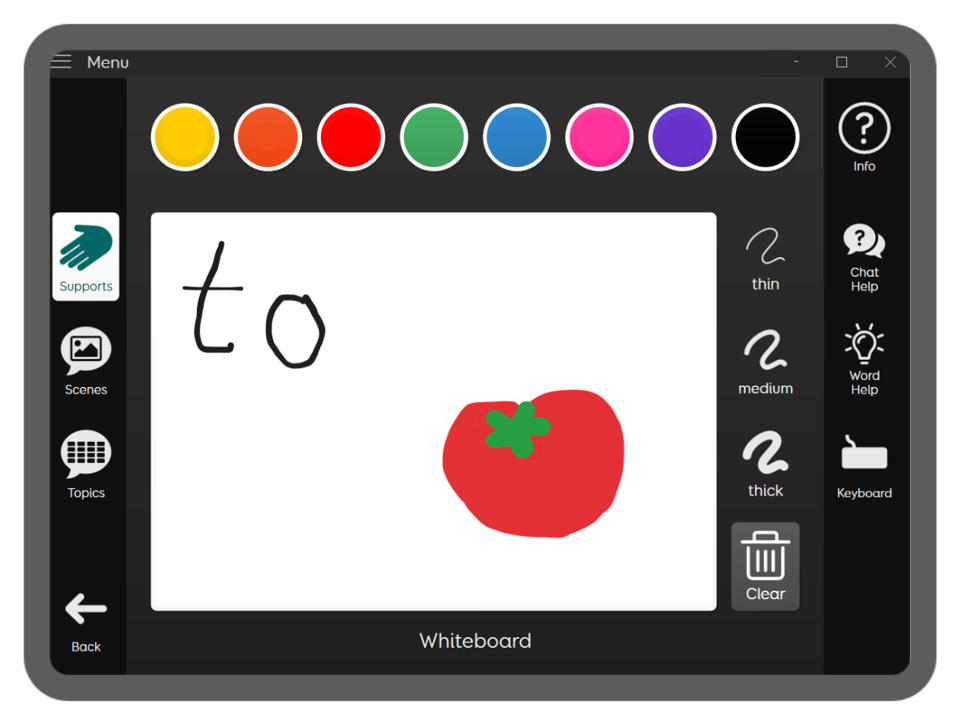
Using the Whiteboard feature in the grid set can be a creative way to communicate your word. You can vary your pen colour and thickness to draw a simple picture. You can also write the letters in the word if you know them.
The Picture Dictionaries are a useful feature if you know the category your word is in – for example ‘nature’, ‘clothes’ or ‘feelings’.
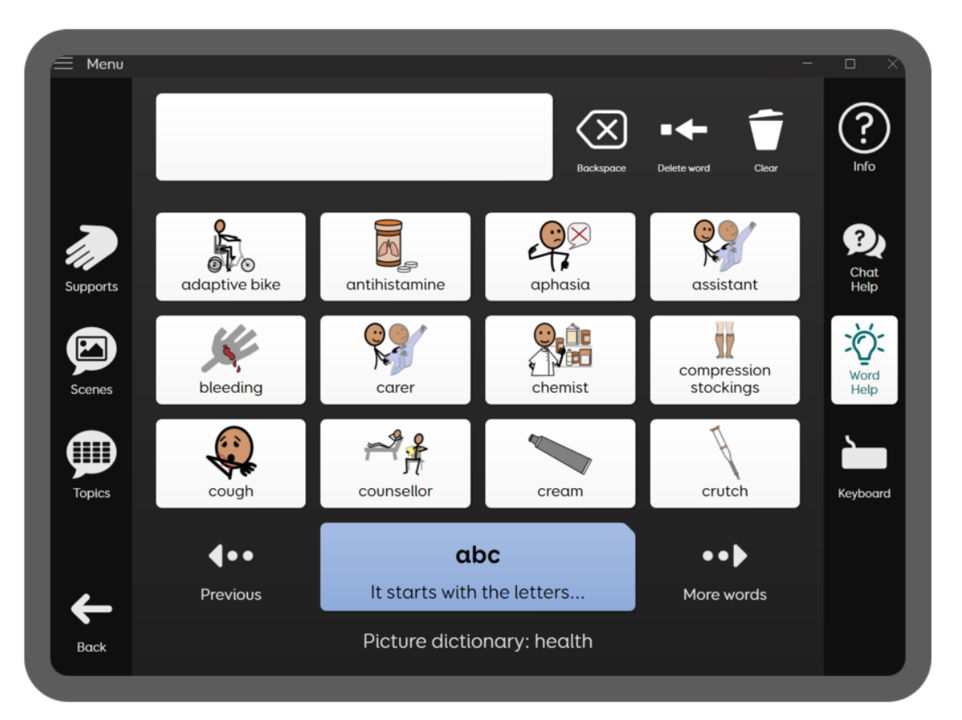
Once you’ve selected your category, you can scroll through a list of relevant words, where hopefully you will find the word you are looking for, and it’s possible that the related words and symbols may help ‘cue’ the language.
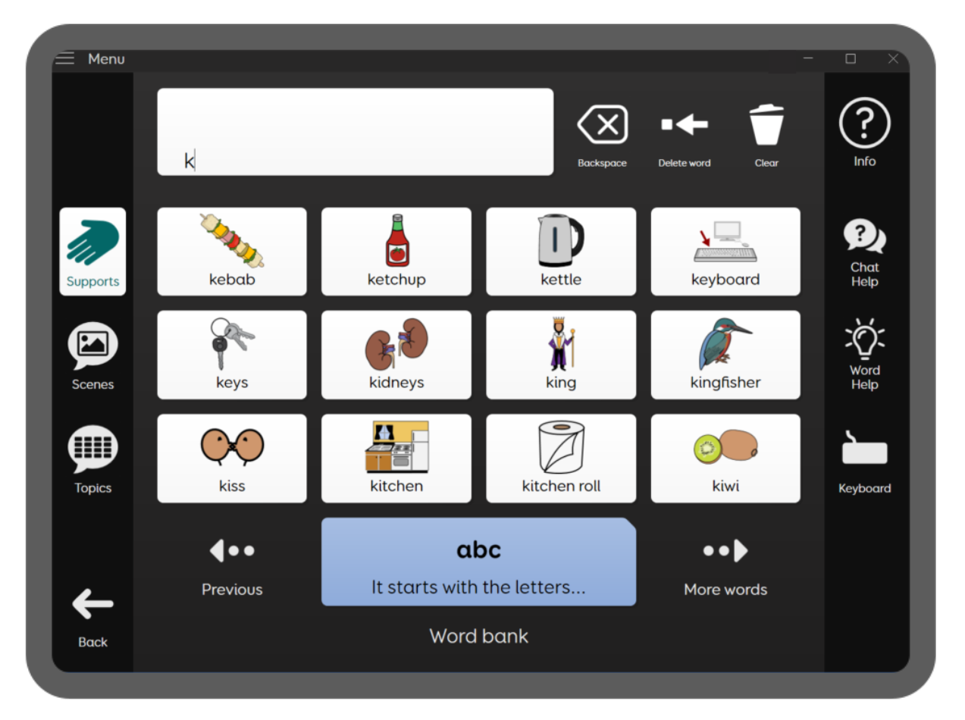
Word bank works in a similar way, but instead of selecting a category, you type the first letter or letters of a word, and a list of words starting with your letter or letters are displayed.
Meeting new people
Aphasia can feel isolating and affect your confidence. It can be especially difficult meeting and interacting with new people, whether that is people you meet through your hobbies or friends, people at an aphasia group or new carers or medical professionals who support you.
There are different sections of Aphasia Duo which can be personalised to support these interactions. ‘My Life’ is an area that can be personalised with words and phrases about important aspects of someone’s life, such as their routine, their family, their hobbies or their recent news. There is also a space to add information and guidance about their communication and their stroke or brain injury.
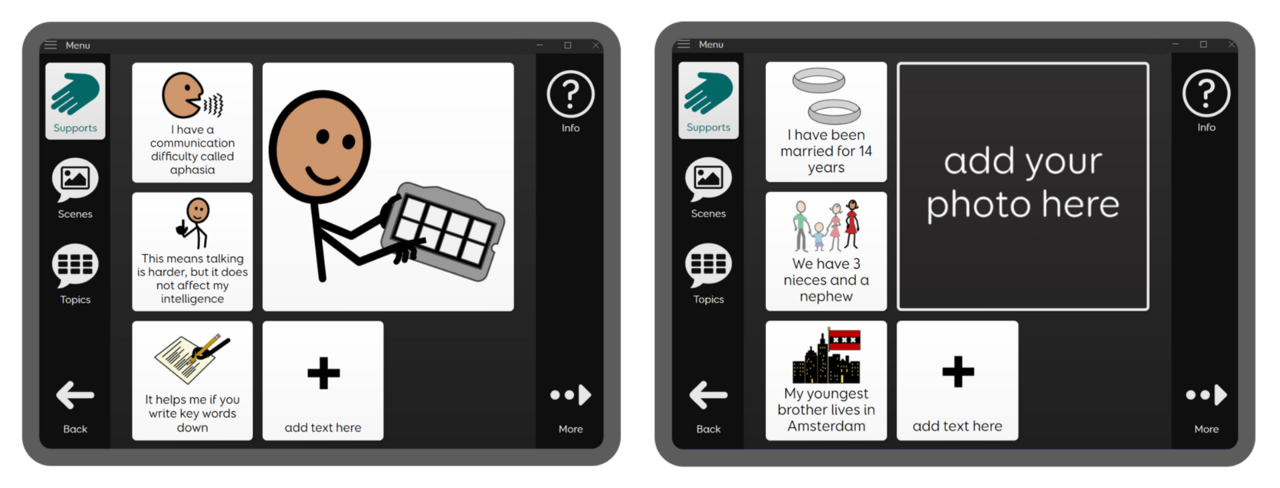
General supports
In addition to language difficulties, people with aphasia often experience co-occurring challenges that affect memory, processing and mental health. Aphasia Duo includes additional supports to help with these areas.
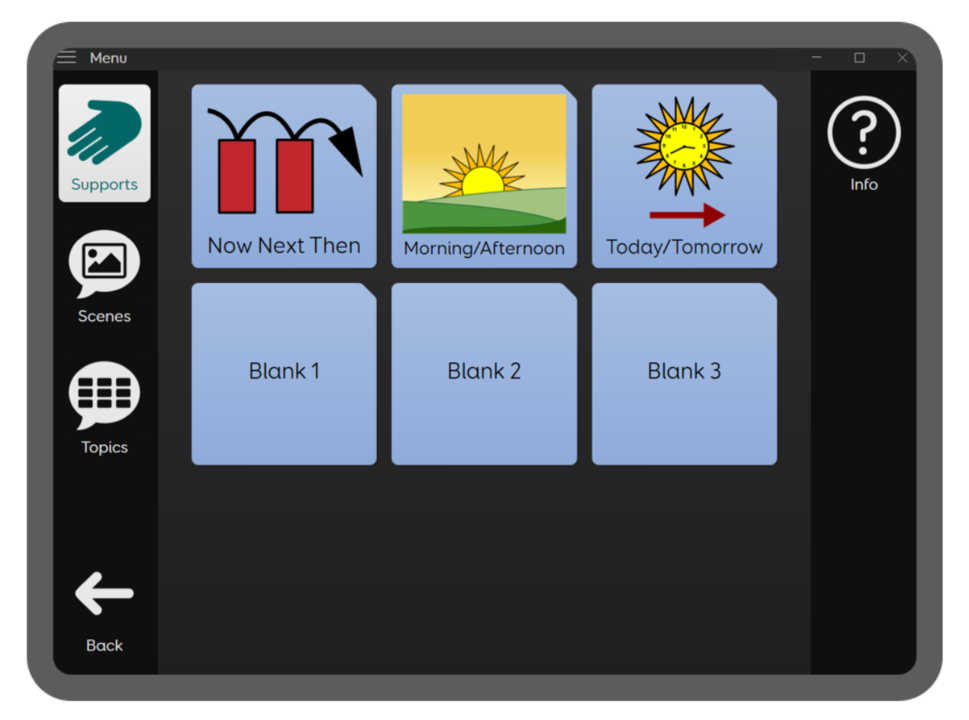
Pre-made and template Schedules can support planning, help with memory of tasks and routines, and provide reassurance.
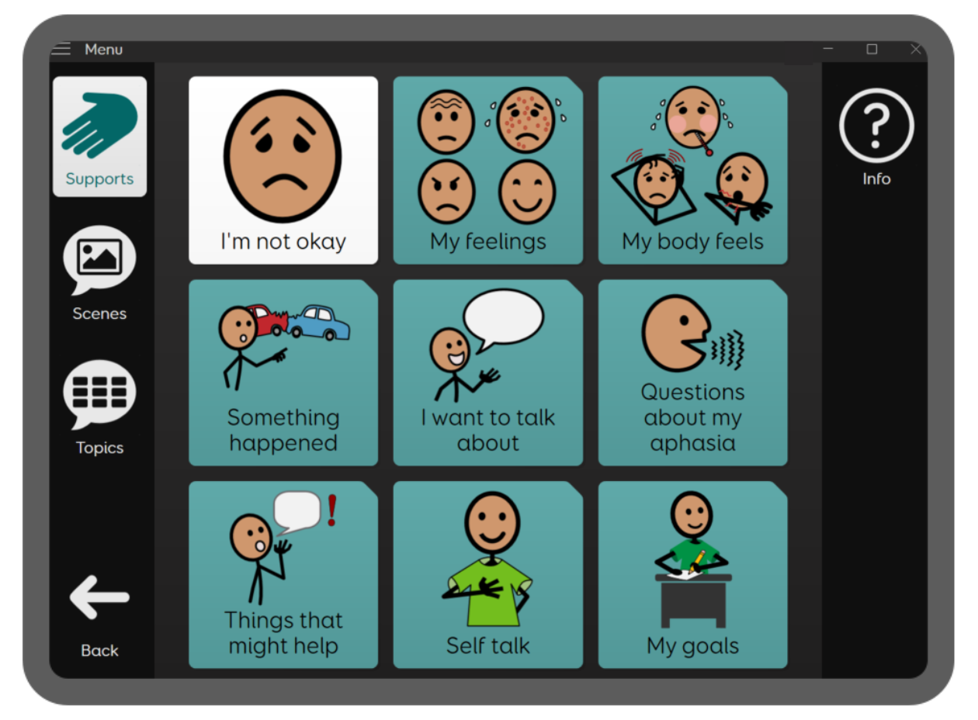
The Mental Health section of Aphasia Duo has grids to support talking about feelings, asking difficult questions, talking about problems and things that could help, as well as a space to discuss and record therapy goals.
There is lots of information and support available if you would like to learn more about Aphasia Duo. Explore our bite-size videos, which take you through some key features and show you how to edit and personalise. Or find further information here, including a link to download a free trial of Grid software