
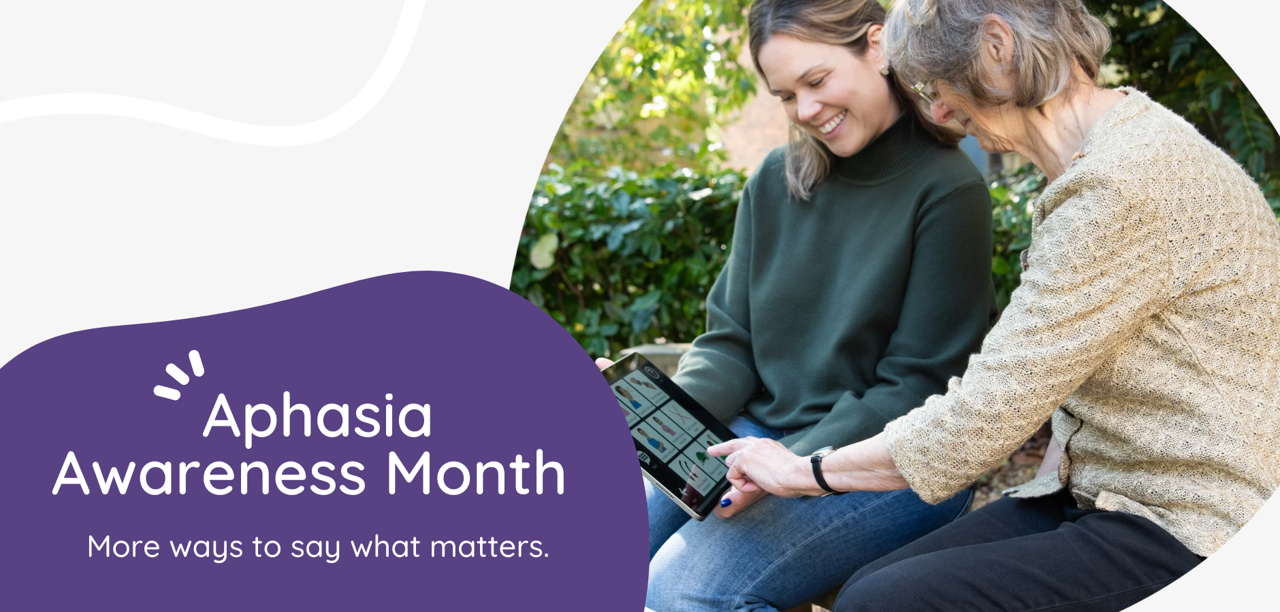
Aphasia Awareness Month 2026
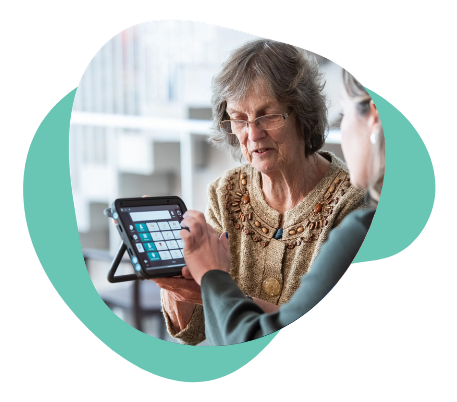
Every June, Aphasia Awareness Month shines a light on a condition that affects millions of people worldwide. It’s estimated that around 15 million people are living with aphasia globally, and that over a third of people who have had a stroke will experience it (NIH, 2022).
Despite this, awareness remains low. Many people are unfamiliar with aphasia or feel unsure how to recognise it and support communication, which can add to the isolation that people with aphasia can experience.
This month, we’re raising awareness of aphasia and exploring how AAC (Augmentative and Alternative Communication) can support communication.
Aphasia is an acquired language difficulty, often caused by stroke, brain injury, or other conditions affecting the brain. It can affect any combination of speaking, reading, writing, and understanding language, which can make communication more challenging. There are many different types of aphasia and they can present very differently. It might look like:
Difficulty finding the right words.
Understanding what’s being said, but finding it difficult to respond.
Relying on gestures or drawings to communicate.
People with aphasia know what they want to say, they may just need the extra support to help express it. That’s why this month is all about helping others understand, connect, and communicate more effectively.
What is Aphasia?
Aphasia is an acquired language difficulty, often caused by stroke, brain injury, or other conditions affecting the brain. It can affect any combination of speaking, reading, writing, and understanding language, which can make communication more challenging. There are many different types of aphasia and they can present very differently. It might look like:
- Difficulty finding the right words.
- Understanding what’s being said, but finding it difficult to respond.
- Relying on gestures or drawings to communicate.
People with aphasia know what they want to say, they may just need the extra support to help express it. That’s why this month is all about helping others understand, connect, and communicate more effectively.
Aphasia and AAC
AAC stands for Augmentative and Alternative Communication, and this refers to anything that someone uses alongside or instead of their speech, to support communication. It can include anything from gestures and communication boards to electronic devices that generate speech.
AAC can be helpful for many people. It is often underused by people with aphasia, but there is research to show that it can be beneficial for people with both mild and more severe forms of aphasia.
People who have aphasia will usually work with a speech and language therapist to help improve their language difficulties. They might also be supported to work on compensatory approaches. This acknowledges that language and communication difficulties might remain, and aims to build on a broad range of skills to help someone communicate despite these challenges.
 “For people with acquired aphasia, the change in communication happens very suddenly, so using AAC is often completely new territory. It’s really important that everyone around them helps to normalise having the device present and gets involved in using it during conversations. It’s not only the responsibility of the person with aphasia to initiate using the device or to be able to navigate it. When AAC is approached as a shared tool, something used by families, carers, and friends together – it becomes much more powerful. Everyone benefits when communication is truly a team effort.”
Alyssa, Speech and Language Therapist, Sirona Care & Health
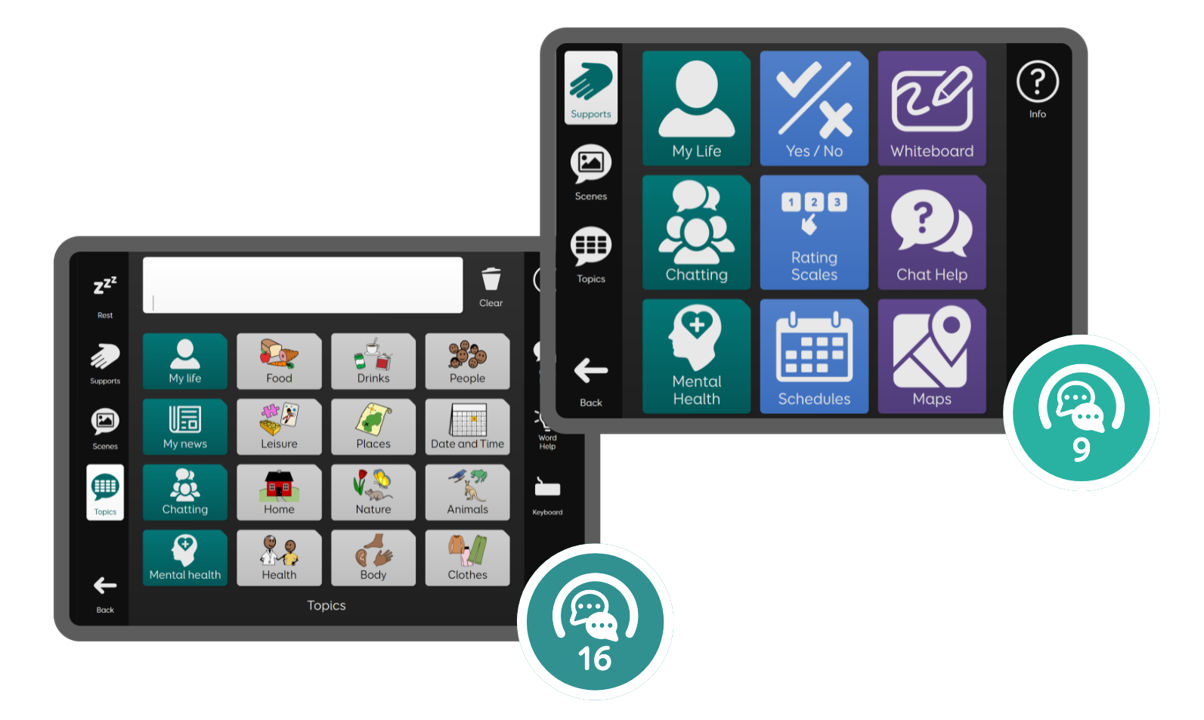
At Smartbox, we offer our flagship AAC software, Grid. Within Grid, we’ve developed Aphasia Duo – a specialised grid set designed to support people with aphasia in expressing themselves and staying connected.
Coming up this month
Throughout June, we’ll be sharing clinical insights and practical guidance to show how AAC can support people with aphasia and those around them.
Whether you’re learning about aphasia for the first time or supporting someone day to day, our aim is to help you better understand aphasia and the tools and approaches that can support communication.
Explore our Aphasia Awareness Month content from 2025
Take a look back at last year’s content, including insights, resources and stories focused on supporting communication with aphasia.
Learn more about voice and AAC
Explore the voices options available in our Grid AAC software, or download our Grab Guide for MND/ALS for more practical guidance, insights and links to further resources.