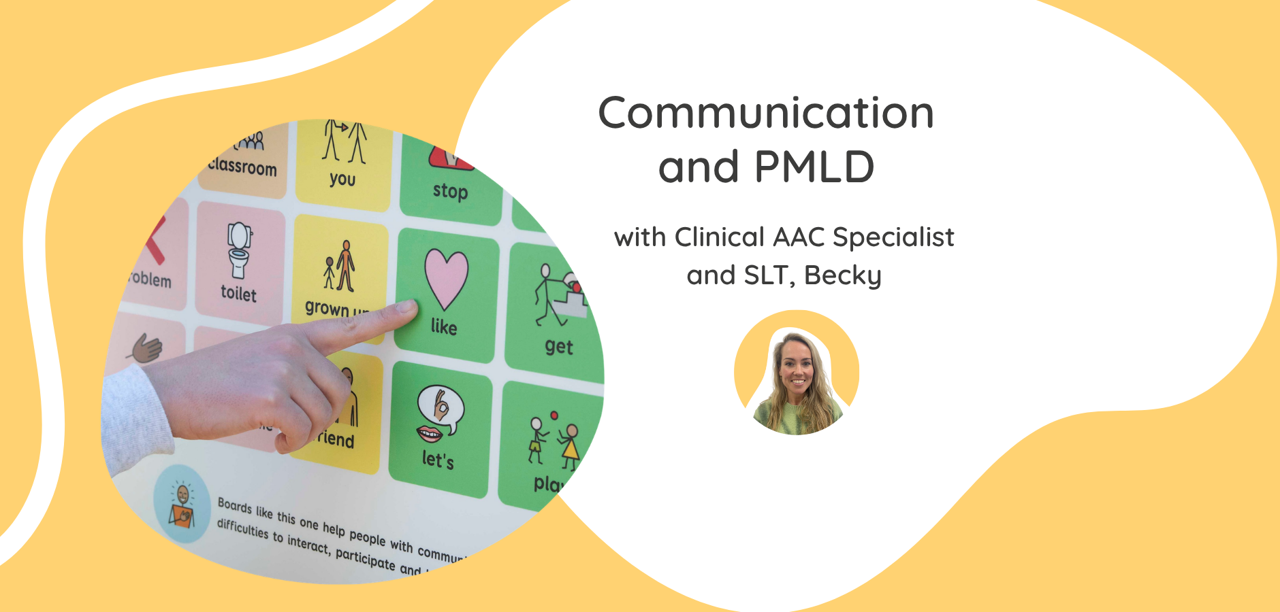
Profound and Multiple Learning Disabilities (PMLD) and communication
 Communication can look different for everyone. For people with profound and multiple learning disabilities (PMLD), it can sometimes be subtle, emerging or easily missed – making the role of the people around them particularly important.
Becky, Clinical AAC Specialist and SLT, reflects on what more we can do to notice, understand and respond to the many different ways people communicate. Drawing on more than 20 years of experience, she explores the importance of “watchful waiting”, recognising communication attempts and creating meaningful opportunities for people to participate and have a say in their own lives.
.
Seeing the person before the label
Profound and multiple learning disabilities (PMLD) is a term used to describe people with a profound learning disability alongside other needs, which may include physical disabilities, sensory differences or complex health needs. But a definition can only tell us so much; it can never tell us everything about the person.
Getting to know the person has to be the biggest priority: Who are they? What makes them smile? What do they enjoy? Who matters to them? What do they dislike? And how do they let us know what they want, need, think and, perhaps most importantly, what they have to say?
When someone’s communication skills are emerging, becoming intentional, or we simply aren’t sure yet, getting to know the person can sometimes feel daunting. I often wonder whether this means the skills of people with a diagnosis of PMLD can be overlooked or underestimated.
For me, there is one important thing to remember: there are so many ways to get to know someone, even when their communication doesn’t look like the conversations we might be used to having.
Watchful waiting
Working with people with PMLD has always been an area I’ve felt so much passion, curiosity, protectiveness and hope for. It has also involved stepping back and really noticing. I’ve long called this “watchful waiting”. I’m certain I picked that term up from someone brilliant I worked with in the past, although after 21 years I can no longer remember who – so thank you, whoever you were!
Communication might include:
- A movement – perhaps a shift from moving to becoming still, with an anticipatory feel to it.
- A change in breathing – from fast to slow, or the opposite.
- A vocalisation – short, loud, quiet or sustained.
- A facial expression – a frown, widening or closing eyes, a huge smile or showing their tongue.
- Eye gaze – from tracking something to sustaining their gaze for a short or longer period.
- A smile – one that builds slowly or appears instantly, and perhaps changes depending on the stimulus and other cognitive, physical or medical influences.
- A gesture – a hand moving or beginning to lift, a shrug or turning their head away.
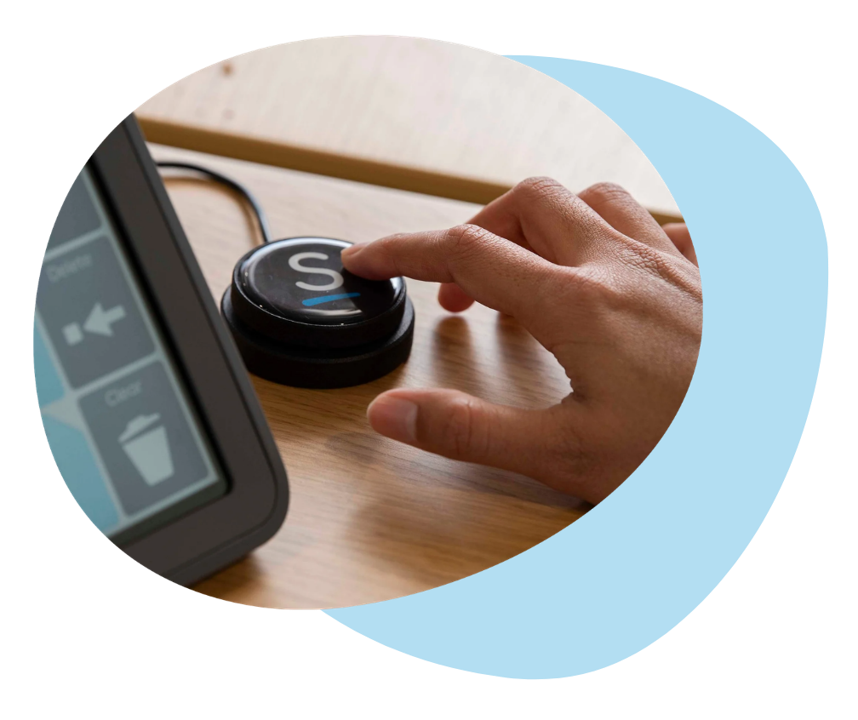
- A switch press – instantly activating something that plays aloud, moves, glows or vibrates, with that immediate response being particularly important at this stage of someone’s communication journey.
The next part is really on us
When we notice a consistent response to something that matters to that person, it’s on us as communication partners to help understand its meaning and respond consistently.
Sometimes, these forms of communication can be incredibly subtle, but that does not make them any less meaningful. We need to slow down, give people time, watch and listen carefully, and learn what communication looks like for that individual because it might not look the same as anyone else’s.
Creating a Communication Dictionary
This is one of the reasons I’ve long recommended using a Communication Dictionary.
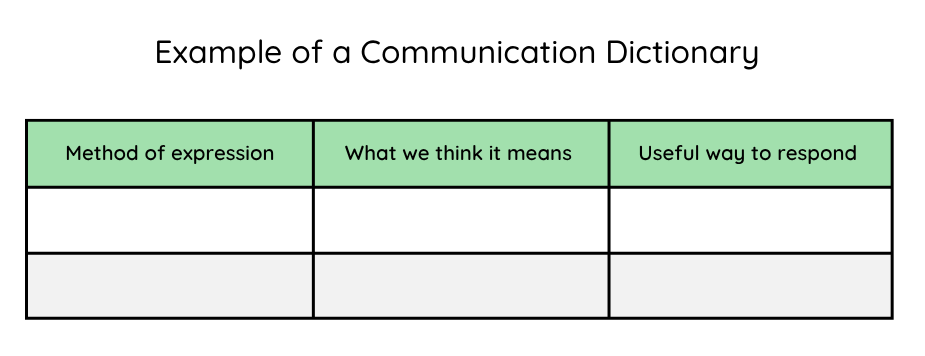
Creating a Communication Dictionary is about recording, celebrating and understanding the individual ways a person communicates, including things that might otherwise be missed, misunderstood or simply described as “behaviour.” You can see an example of one below.
It encourages us to become detectives of communication: What does that smile mean? What does that vocalisation tell us? What happens when they turn their head away? How do we know they have had enough, or that they want something to continue?
Speaking needs to stop being thought of as sitting at the top of some communication hierarchy. There are many ways to communicate, and our job is to value them all.
Looking at what someone can do
As a Clinical AAC Specialist, and previously a Speech and Language Therapist, I’ve worked across a whole range of settings. I’ve often preferred to describe someone’s communication and interaction skills from emerging intentional through to intentional and then focus on what they can do and the tools and strategies that could help extend those skills:
- What can we notice?
- What can we build on?
- What might become possible if the right opportunities, communication tools and support are put in place?
Shifting our focus away from what someone cannot do and towards what they can do can change what happens around them. It changes what we look for, the opportunities we create and what we believe might be possible.
 Finding the right AAC
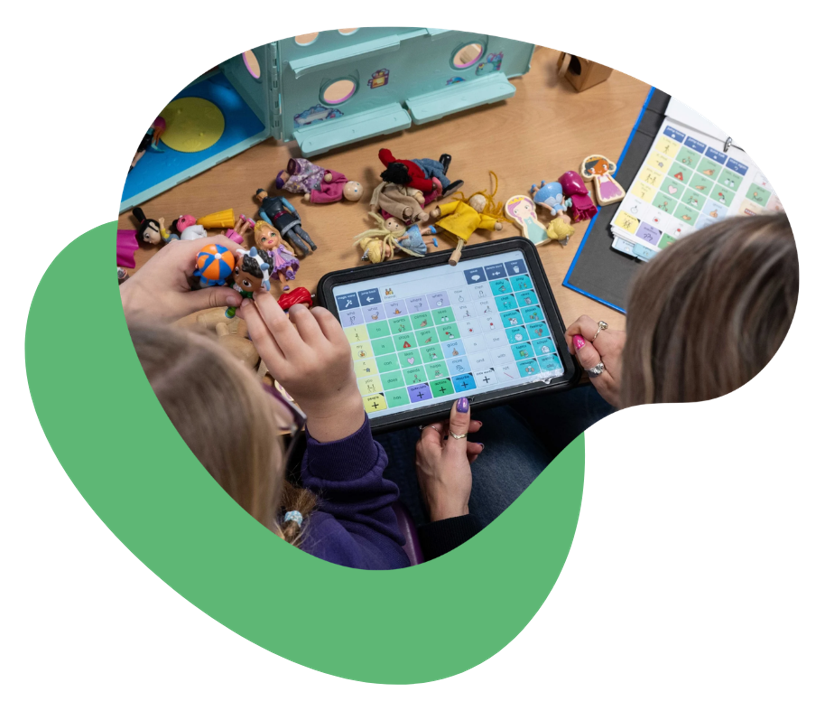
For people with PMLD, AAC can take many different forms and combinations. It might include textured references ahead of transitioning to an activity, objects of reference, switch-activated toys, symbols, communication books, partner-assisted scanning, eye gaze, switch access, single voice output devices or a dynamic high-tech AAC device.
There is no single solution that works for everyone, and for me, the question shouldn’t just be: “What can this person use?”
We also need to ask:
- What does this person want to communicate?
- What matters to them?
- How can we give them more opportunities to influence what happens around them?
Because even the most amazing AAC system cannot create communication opportunities on its own. The people around the person matter enormously.
If we constantly anticipate what someone needs, ask questions, finish their messages or move on before they have had time to respond, we may unintentionally reduce their opportunities to communicate. But when we wait, model without demand or expectation, respond consistently to communication attempts, offer meaningful choices and create reasons to communicate, something much bigger can start to happen: we build connection and active participation. We discover more about the person and we start to see skills and abilities that might otherwise have been missed.
What opportunities are we creating?
People with PMLD are sometimes spoken about primarily in terms of their support needs. Of course, understanding those needs is important, but we also need to think about the opportunities we create for someone to show us what they can do:
- What could they tell us if we gave them more time?
- What choices could they make if we gave them accessible ways to express those choices?
- What interests could we discover?
- What relationships could develop?
- What might become possible if the people around them had the knowledge, confidence and tools to support communication throughout the day?
This isn’t about expecting every person to communicate in the same way. It’s about making sure we don’t underestimate what someone has to say simply because they don’t communicate in the ways we might expect.
For me, good AAC practice starts with seeing the person before the label. It starts with curiosity, noticing strengths and recognising communication attempts. And it means creating genuine opportunities for communication, connection and participation.
Because communication isn’t just about being able to say something, it’s about having the opportunity to have a say. And I think that is something every person deserves.