
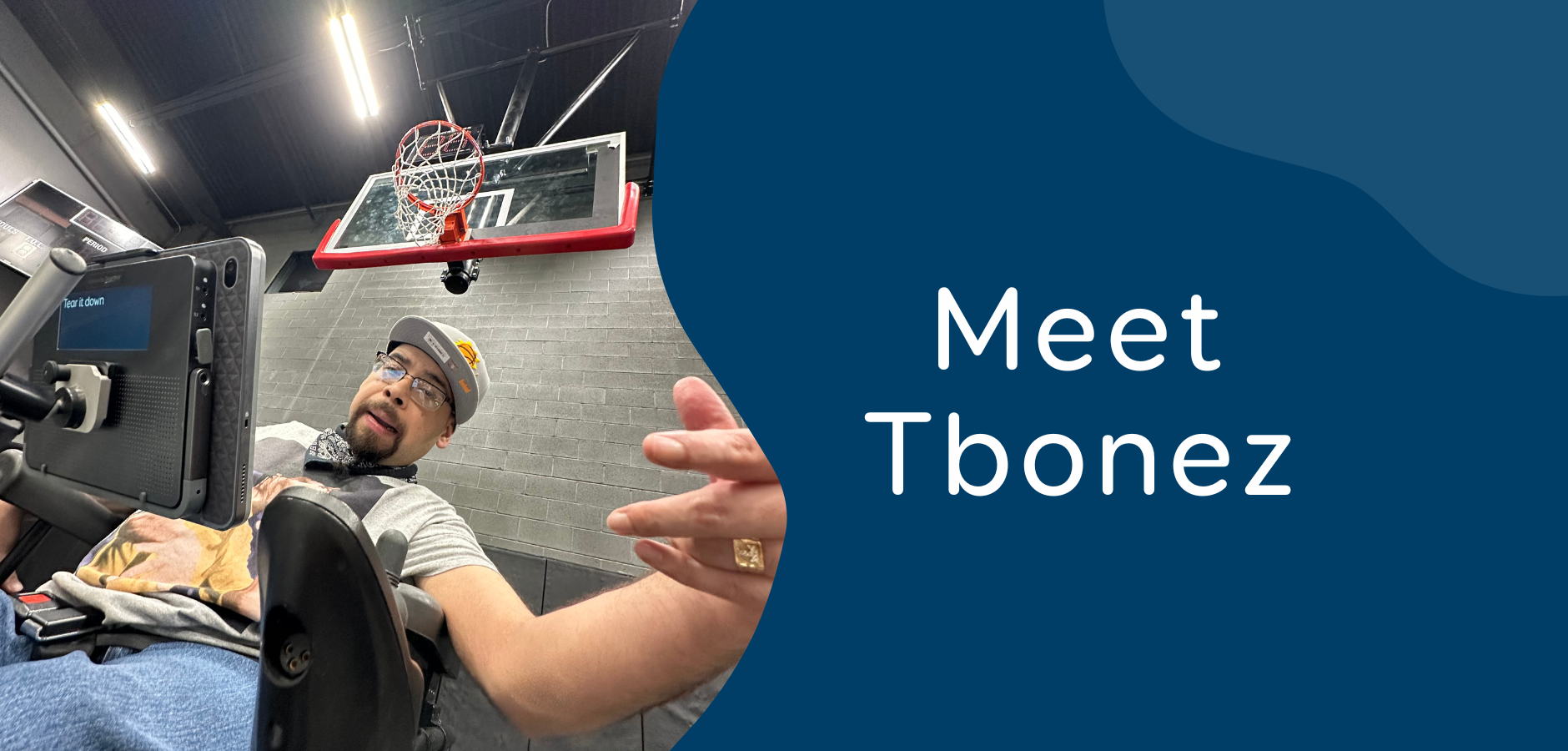
Meet Tbonez
Tbonez is a rapper from Phoenix, Arizona, who creates and performs his music using his Grid Pad 13. Living with cerebral palsy, he’s found AAC not only gives him a voice, but also a way to share his story through hip hop. With several albums released and regular performances across Arizona, Tbonez continues to build his career and connect with audiences. In this interview,
For those of you who don't know yet, who is Tbonez? Can you tell us a bit about your background and experience with cerebral palsy?
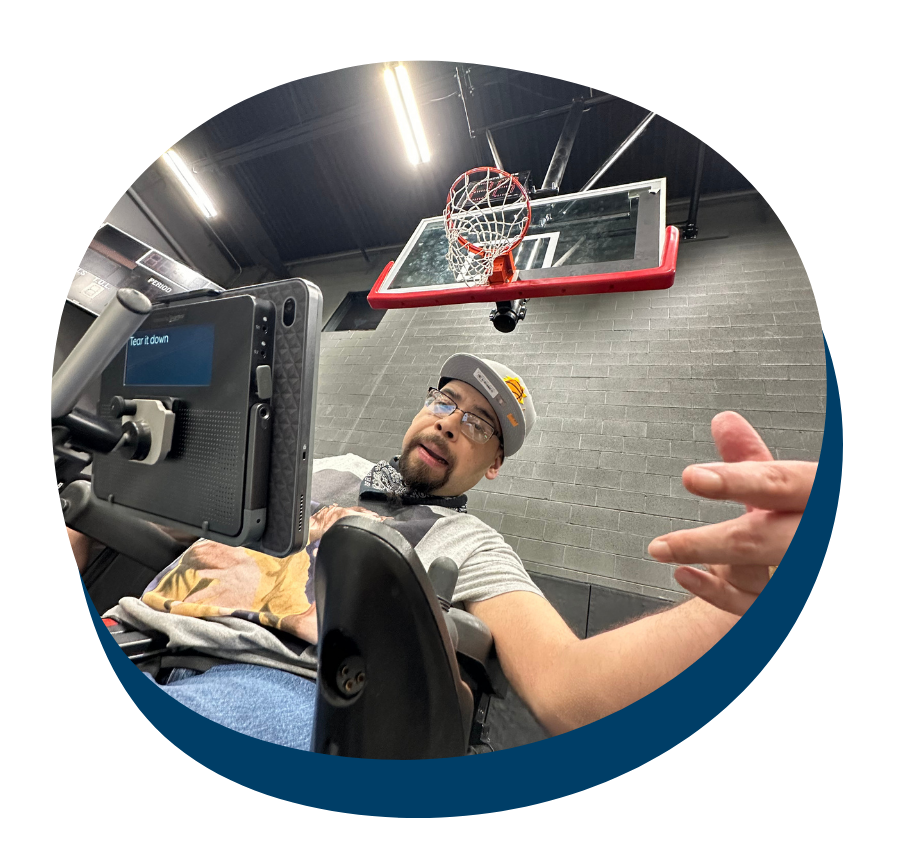
My name is Tbonez and I am the Stephen Hawking of rap. I rap with a computer due to cerebral palsy (CP). I live in Phoenix, AZ, and I grew up with my mom, my sister, and my brother.
I was born in ‘85, so you do the math on how old I am. I started having seizures when I was three months old, and the doctor said I had an infection in my brain. CP affects my muscles and motor skills, so I can’t walk or talk and I can only use my left hand.
When did you start using AAC to communicate, and how did you come across the Grid Pad?
I first started using a communication device when I was about ten years old. Back then, I hated it – it was big, bulky, and had pictures on the buttons.
Fast forward to 2024, I came across the Grid Pad while searching for a new device. The process of getting a new AAC was a little long, but the wonderful ladies at CRS (Children’s Rehabilitative Services) and Brittany from Smartbox helped me out. They showed me three models, and I really liked the Smartbox device. The layout of the Text Talker grid is clean, it has all the features I need, and it’s the most advanced device I’ve ever worked with.
Could you walk us through your daily routine and how AAC fits into your life?
The first thing I do when I wake up is have my cup of coffee – that’s a must! Then I check my phone and reply to important messages. After lunch, I usually head to my studio. I spend at least 6 hours there during the week writing, recording, and mixing with my AAC.
I use my Grid Pad for networking and performances too – it’s a big part of the music industry. I also like that I can make calls and text people through the Fast Talker grid set, especially when I don’t have my phone with me.
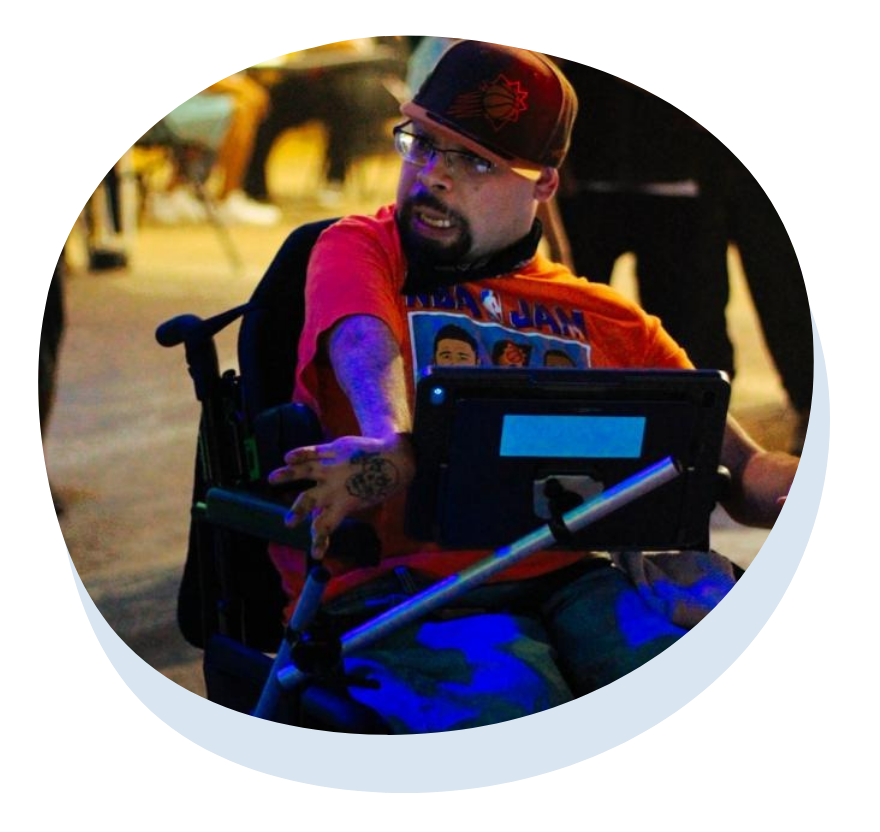
When did you realise you wanted to be a rapper? Who influenced your style, and how has your music evolved?
I started writing music when I was 12. It began in the classroom with a friend, when we would rhyme about people around us. Then I started writing about my feelings. A lot of my early lyrics were dark. I was a big fan of Brotha Lynch Hung, and artists like him helped me channel that energy. Later, my brother Fat Mic told me to write about my life, and that’s when I really started developing my own style.
Instead of doing homework, I was studying hip hop – from the west, east, midwest, and dirty south. My biggest influences are Big Punisher, Wu Tang Clan, Eminem, and Tech N9ne.
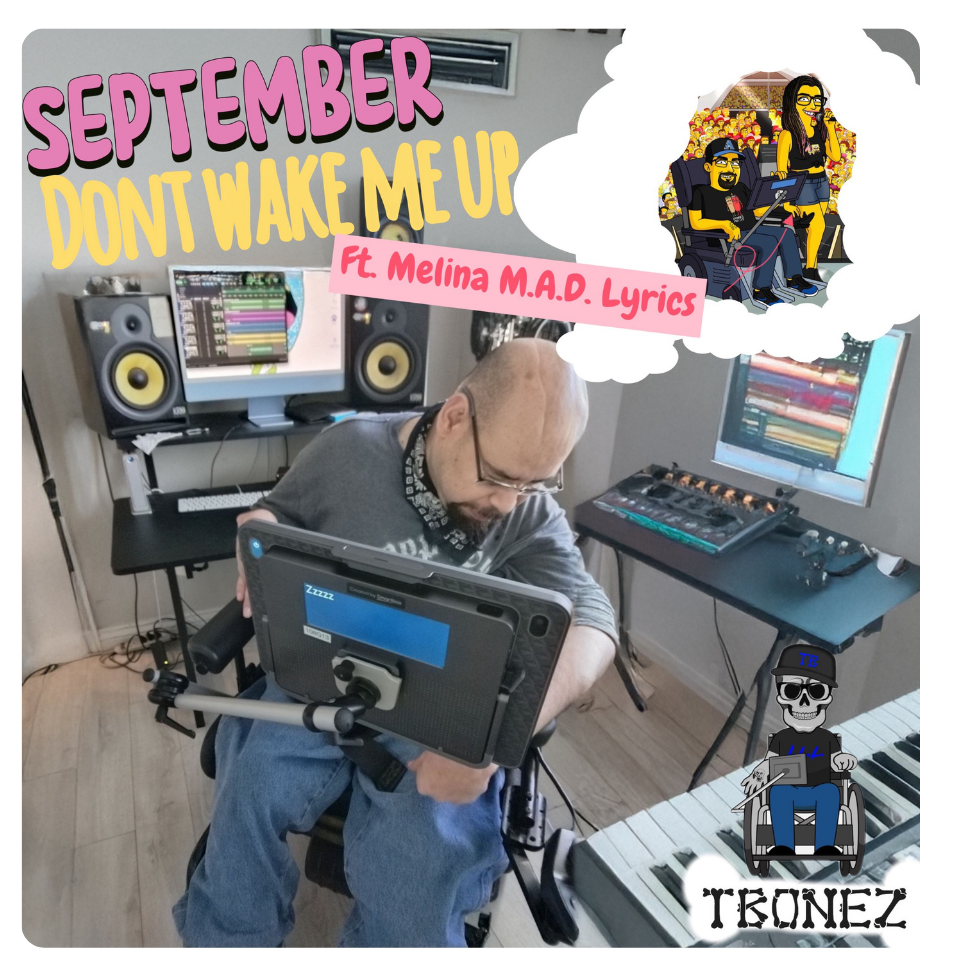
I started releasing music in 2019. Since then, I’ve put out 4 albums, about 20 singles, 3 EPs, and album number 5 is coming later this year. I always say I’ve been married to the game 7 years now, and my music is my kids.
Can you talk us through your creative process – writing, recording, and performing?
I use the Text Talker grid to write all my lyrics. I type to the beat, add punctuation where the flow needs it, and then save verses in Quick Phrases.
For recording, I use an auxiliary cable to connect my Grid Pad to my interface and then into my iMac. I use Pro Tools, and I actually went to Phoenix College for audio production – shoutout to Jamie Weddle, who taught me everything I know.
Performing live has been a grind. The hardest part is usually getting on stage because a lot of venues don’t have ramps. Sometimes I prefer staying at the front of the stage anyway as it makes the show more personal. I pre-record everything so I don’t have to hold a microphone.
My first performance was at the Arizona Hip Hop Festival in 2021. In 2022, I opened for Dizzy Wright with Fat Mic, which was our biggest crowd yet. Since then, I’ve been performing all over Arizona – Scottsdale, Peoria, Casa Grande, Glendale, and Tucson. Next month, I’ll perform at the Tucson Hip Hop Awards, and for the first time, I’ll be on an actual stage. That’s gonna be dope.
.png)
"I'm proud that I found my purpose. Even though I can’t work a regular job, music became more than a passion; it became my life. Looking ahead, I want to launch merch, play bigger shows, and share my story around the world.”
Tbonez
How do people respond to your performances? Any memorable moments?
I love watching people’s reactions, especially when they don’t expect me to come on stage with a computer and rap. At one of my first shows, a little boy came up to me and asked for my autograph. That really hit me because when I was younger, kids were scared of me. Now, kids come up for pictures.
Another time, I won an open mic where the crowd was the judge. Their energy built up round after round, and I got to headline the next event. That was a special moment.
What does expressing yourself through music mean to you, and how has AAC shaped your journey?
Music is everything, it’s my superpower. It gave me a voice when I couldn’t find one. I used to get frustrated because I couldn’t express myself the way I wanted, but music saved my life.
AAC has given me confidence too. I was shy growing up, but then I learned about Stephen Hawking and how he could command a room with his computer. That inspired me.
Finally, what advice would you give to someone new to AAC?
Never give up. Don’t be afraid to speak your mind, even if you can’t talk. I still get frustrated sometimes, but I love that I can use my Grid Pad to express myself. When there’s a will, there’s always a way.
Thank you to Tbonez for sharing his story with us. You can follow Tbonez and learn more about him and his music on his Instagram. If you’d like to tell us about your own experience with AAC, we’d love to hear from you – please get in touch at [email protected]