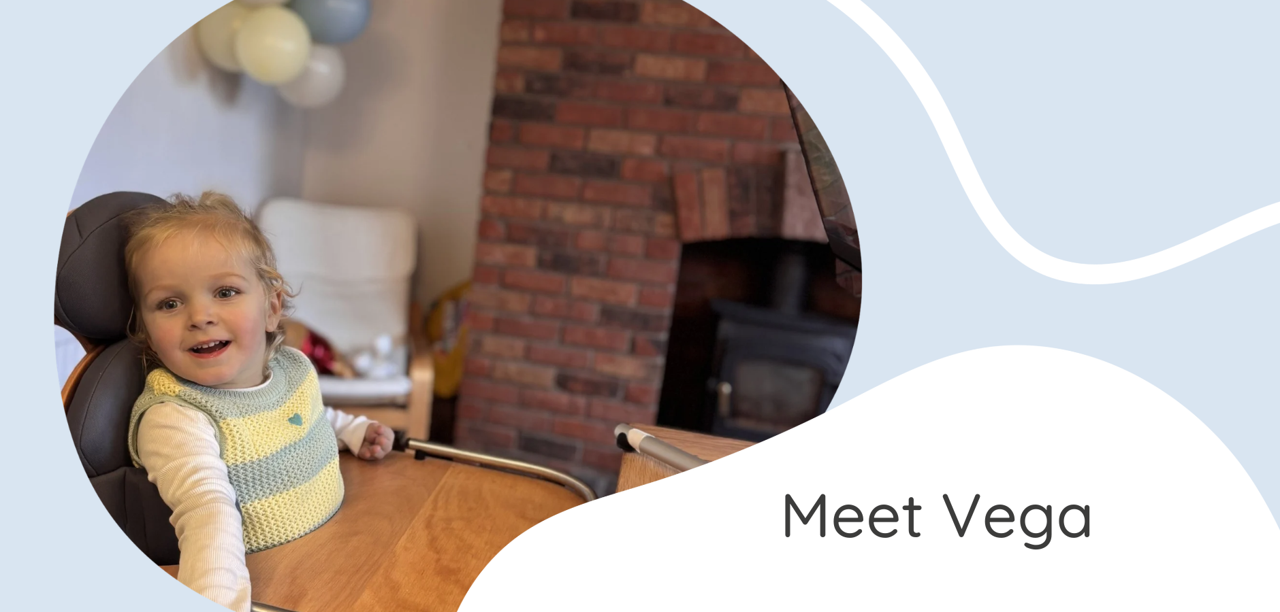
Meet Vaga
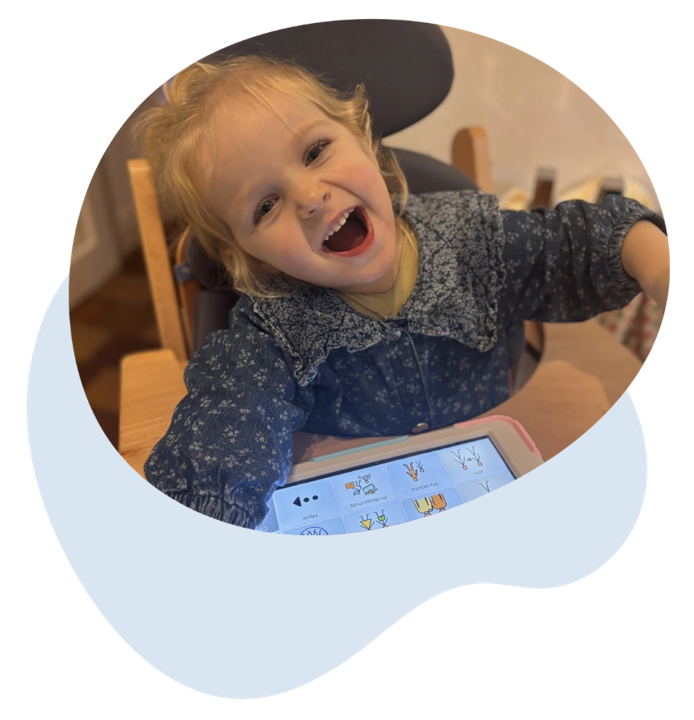 Vega is a happy and curious five-year-old who loves books, swimming, and spending time with her family. She communicates using AAC and is about to begin her HomeEd journey.
Her mum, Alba, recently shared how they’ve been using both Grid Pad and Grid for iPad to support Vega’s communication at home and out and about, helping her express her choices, interests and growing independence.
Can you tell us a little bit about Vega and what everyday life looks like for her?
Vega is a determined, bright and happy five-year-old. She has a great sense of humour (especially if the dog is in trouble!), her favourite song is “The Drunken Sailor” – not the nursery version – and absolutely nothing passes her by. She’s currently very into the movie “Moana,” loves a new outfit, and enjoys having her hair styled with lots of sparkly clips.
Vega is on the cusp of officially starting her HomeEd journey, although early learning has been part of her life for years. She spends her days at home with her mum and three-year-old sister, Leonora, and of course their Westie, Wilson – keeping busy with an extensive home physiotherapy programme, playgroups, trips out, and plenty of fun play (and learning).
What kinds of things does Vega most enjoy doing at home, at school, or when you’re out together?
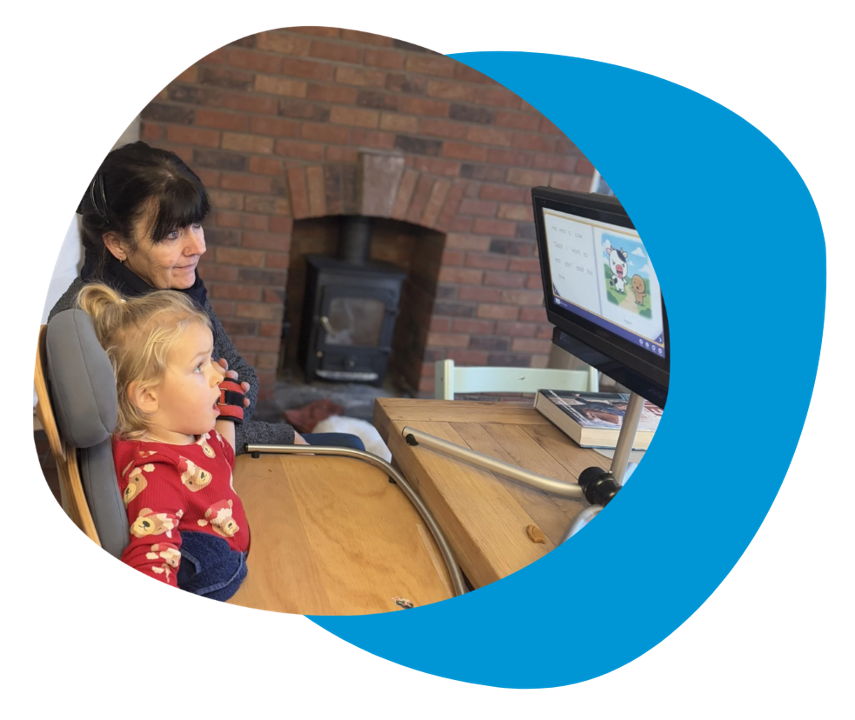
Vega absolutely loves books. She enjoys reading to us (and will stop and stare if you get distracted – it’s quite funny!) and reading independently too – she’ll happily get through three Accessible Books in a row (around 72 pages in total). We’ve definitely made our way through the collection! She also enjoys being read to from regular books, using resources like BBC Storytime on her iPad, and visiting the library to choose new stories.
Swimming is a firm favourite – we go as a family once a week (she always asks for it in Super Core 50!). She loves heading out on her trike and using the TREXO exoskeleton when we travel to Lanzarote for therapy intensives. More recently, she’s started hippotherapy (horse riding), which she absolutely loves.
Vega is very creative and rarely goes a day without asking to draw, paint, or try out a new craft set.
Would you feel comfortable sharing a little about Vega’s early life and the journey that led you to explore AAC and communication support?
Vega suffered a brain injury during birth and now lives with Dyskinetic Cerebral Palsy. We knew relatively early on that she would benefit from AAC as early as possible. We found our Speech and Language Therapist, Laura Keeling (whom we love!!), around the time Vega turned two and she encouraged us to explore an AAC device with eye gaze for Vega.
Laura recommended Smartbox and Grid and we liked the look and setup of the Grid Pad (and Smartbox AT Specialist, Jess MacRae!) so we only ever did one trial.
What was the experience like when Vega first began using AAC – were there any early challenges or moments that stood out for you?
The first time we had the trial, Jess came out and she was just marvellous. We also felt we had confirmation for what we had always known and never doubted, Vega is super smart. She (Jess) mentioned from the get go, that Vega had one of the best calibrations (if not the best?) she had ever seen for someone that young. For the rest of the session Vega was requesting all of us to play different instruments. It was pretty emotional and I even heard “mum” for the first time, which of course had me in tears.
Vega now uses both Grid Pad and Grid for iPad – can you tell us how and when she uses each one?
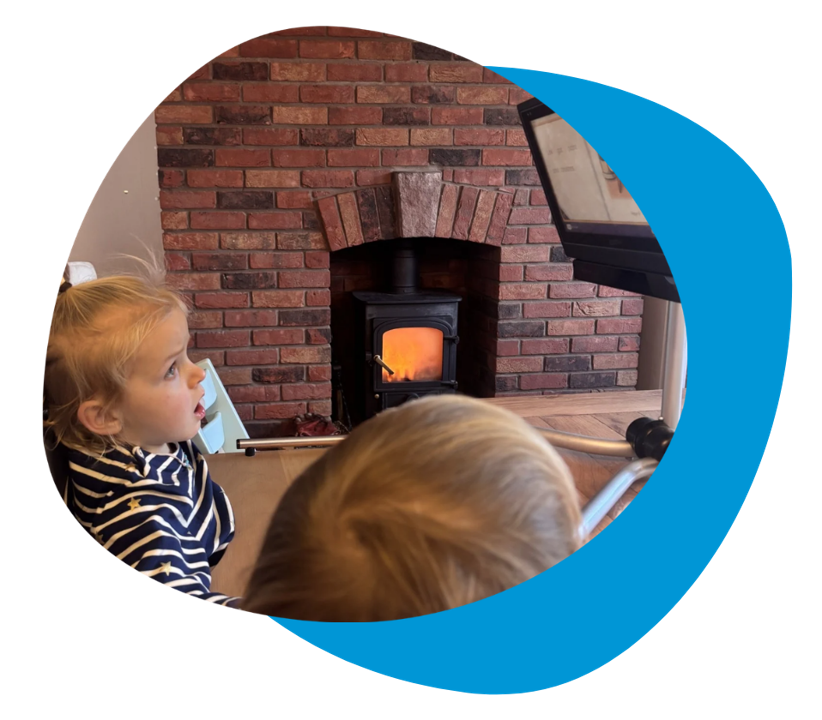
We mainly use her Grid Pad when we’re sitting in the dining room doing more intentional “work.” This might include educational activities, reading, exploring grid sets, or even fun time playing in Look Lab. It’s also when we focus on more structured communication and modelling around a specific topic, going a bit deeper. That said, it’s not all formal – we use it for social chats too, and for things like video calling Mormor (my mum – I’m from Denmark).
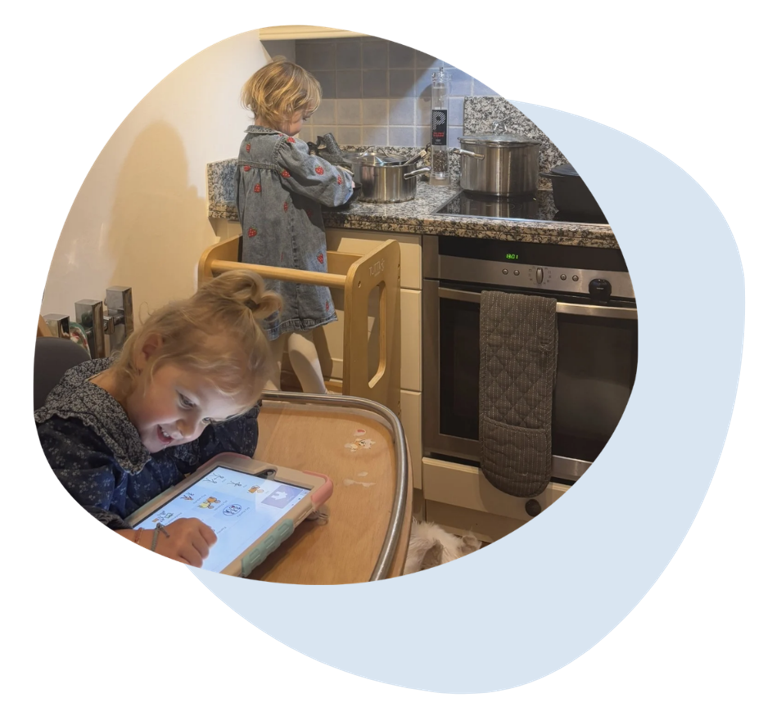 Grid for iPad tends to be used in almost every situation where Vega isn’t seated in her chair with her eye gaze mounted on the dining table. She spends most of her day active around the house (with my support), so it’s the perfect flexible solution. We take it upstairs at bedtime, into the living room when we’re playing, onto her tray in the kitchen while we’re cooking, and with us when travelling, even on the airplane. Because of her limited fine motor skills, we use Voco Chat, which has significantly reduced moments of frustration from being misunderstood.
Dinner time is a great example of where Grid for iPad is often the perfect choice for communication. Because of its size, we can still maintain eye contact and she can naturally join in the conversation. When she’s positioned behind her eye gaze at the table, it’s much harder for us to see her and interact in the same way.
Do you have any favourite grid sets or software in Grid that Vega enjoys using most?
Absolutely the Read with Me: Accessible Stories grid sets! She particularly loves the ‘Rosie and Goldilocks’ and ‘The Three Little Bears’ accessible stories (Leonora, her sister, always asks Vega to read them). Before this, she loved Look to Read and she also quite enjoys playing games in Look Lab, particularly the Zombie shooting game and Whack a Mole.
 How has having access to stories and literacy-focused grid sets supported Vega’s learning or enjoyment of reading?
Vega is the most determined person I’ve ever met and is absolutely adamant about doing things herself – reading included. She shows little interest in stories on her device unless she is actively reading them word-by-word using eye gaze herself. The many hours she has spent reading independently in Look to Read have played a huge role in how early she learned to read and in nurturing her love of books.
As Vega’s mum, what have you learned along the way about modelling, patience, or encouraging communication?
I think it’s so important to emphasise that eye gaze is a medium we both use to communicate together. I model for Vega using my voice, but also on her device. Now that we have Grid for iPad, I can model and chat in Super Core 50 on the iPad while Vega is on the same page using her eye gaze – how cool is that! It’s also shown me just how much effort goes into learning and remembering where every symbol and word lives. That’s still very much a work in progress for both of us.
Because of Vega’s dystonia, she sometimes selects a different word than the one she intended. It can take several tries, which can understandably feel frustrating, even though she is incredibly determined. One of the biggest learning curves for me has been realising that communication may not always look “perfect” – not because of a lack of understanding, but because of the nature of her movements. It’s reminded me how important it is to allow time, to be patient, and to recognise the immense effort involved in scanning, mapping, and selecting the right words. I am constantly in awe of her. This is something I may never have been able to understand had Vega not started using AAC.
 What advice would you give to other families who are just starting out with AAC?
There will be times when your child seems less interested, or perhaps not interested at all – keep going. That’s completely normal. We’ve also been incredibly fortunate to work with a SaLT who is genuinely enthusiastic and invested in AAC and literacy. Having that kind of support has made getting started and navigating the journey so much easier for us.
How do you see Vega’s communication continuing to grow in the future?
I can see Vega becoming faster and more precise in Super Core 50. However, we’re also working towards her becoming really confident with literacy, and when the time is right, we’ll look at moving from Super Core 50 to something like Fast Talker or Text Talker. That’s one of the reasons we place such a strong focus on literacy – we want Vega to be able to create truly novel messages and say exactly what she wants to say.
What would you say to other parents considering trying Grid or Grid for iPad for their child?
Go for it! Being able to communicate with your child is invaluable. Smartbox have been incredibly supportive – I’ve called a few times with questions and they’ve always been kind and helpful.
I also think it’s worth trialling Grid for iPad as an additional tool in your communication toolkit, even if your child doesn’t have strong fine motor skills. There will be mistakes, but there will also be so much connection. I truly believe you need the opportunity to learn in order to master something, and that’s why we just went for it. Tight hands, dystonia and all. I’m so glad we did.
A big thank you to Alba, Vega’s mum, for sharing her story with us. You can learn more about Vega’s story and follow her journey on Alba’s Instagram – @throughstruggletothestars
If you’d like to tell us about your own experience with AAC, we’d love to hear from you – please get in touch at [email protected]