The A-Z of AAC: Terminology you need to know
AAC is a broad field. Here is a quick guide to some of the types of AAC available, with guidance on the terminology, and who each solution might be suited to.
What is AAC?
Augmentative and Alternative Communication (AAC) refers to any method of communication used to supplement or replace spoken language. AAC supports individuals who have difficulty with verbal speech, helping them express their thoughts, needs, and ideas more effectively.
Although terminology may vary across regions and professional disciplines, AAC systems are generally grouped into two broad categories: unaided and aided. These systems range from simple gestures, like a wave or a nod, to sophisticated electronic devices.
Unaided AAC
Unaided AAC does not require any external tools or devices. It relies solely on the user’s body to communicate.
Examples include:
- Gestures: Pointing, waving, or shrugging.
- Facial expressions: Smiling, frowning, or raising eyebrows.
- Sign language: American Sign Language (ASL), British Sign Language (BSL), or other regional systems.
- Body language and eye pointing: Using posture or eye movement to convey meaning.
These methods are often intuitive and always accessible, but they also depend on the communicator’s physical abilities and the communication partner’s ability to interpret their meaning.
Aided AAC
Aided AAC involves the use of tools or equipment to replace or enhance spoken communication and is further divided into non-electronic and electronic systems.
Non-Electronic AAC
Also known as paper-based, light tech, or low tech, non-electronic AAC includes tools that do not require electricity or batteries. These systems are often simple, portable, and easy to customise.
.png) Examples include:
Examples include:
- Gesture-based systems or sign language: These include both unaided systems, such as natural gestures and formal sign languages, which rely solely on the body, and aided systems, which incorporate external supports like symbol boards or devices that assist in producing or interpreting signs.
- Communication books: Pages contained within a book that typically have both core and fringe vocabulary.
- Alphabet boards: Boards with letters to spell out messages.
These tools could be someone’s primary method of communication, or can be a useful backup in environments or situations where the AAC user does not have access to their technology.
Electronic AAC
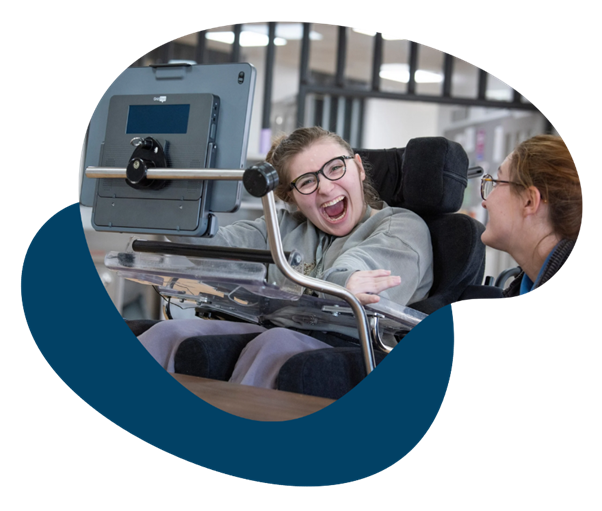
Referred to as mid-tech or high-tech, electronic AAC involves powered devices that provide speech output and dynamic interfaces. These systems can range from basic to highly advanced.
 Examples include:
- Single-message devices: These are sometimes referred to as Voice Output Communication Aids (VOCAs).
- Static display devices: A single display with multiple recorded messages.
- Tablet-based communication apps: For example, an iPad containing Grid for iPad communication application.
- Speech-generating devices (SGDs): These include devices with dynamic display, touch screens or alternative access methods like switches or eye tracking. SGDs range from simple single-message devices to complex systems with extensive vocabulary. These are sometimes referred to as Voice Output Communication Aids (VOCAs).
These systems offer greater flexibility and personalisation, allowing users to build complex language tailored to their needs.
User Centred and Multi-Modal
When selecting AAC, it’s essential to put the individual at the heart of the decision-making process, thinking about all the ways they currently communicate, and what tools could be most helpful in supporting their communication. AAC should not be limited to a single method or device; instead, it should include a range of tools and strategies that work together to support communication across different settings. Whether it’s gesturing, a printed board, a dynamic speech-generating device, or any various combination of methods, the most effective AAC system is one that empowers the user to communicate authentically, independently, and flexibly.
Equally important is respecting and using each individual’s preferred terminology when referring to their AAC systems. Language is deeply personal, and the terms someone chooses to describe their communication tools reflect their identity, experience, and comfort. Our approach is to follow the terminology each user chooses for their AAC system, aligning with our commitment to provide individualised support.
Wondering which AAC tools might be the right fit for you or someone you support? Explore the range of AAC solutions available from Smartbox.