
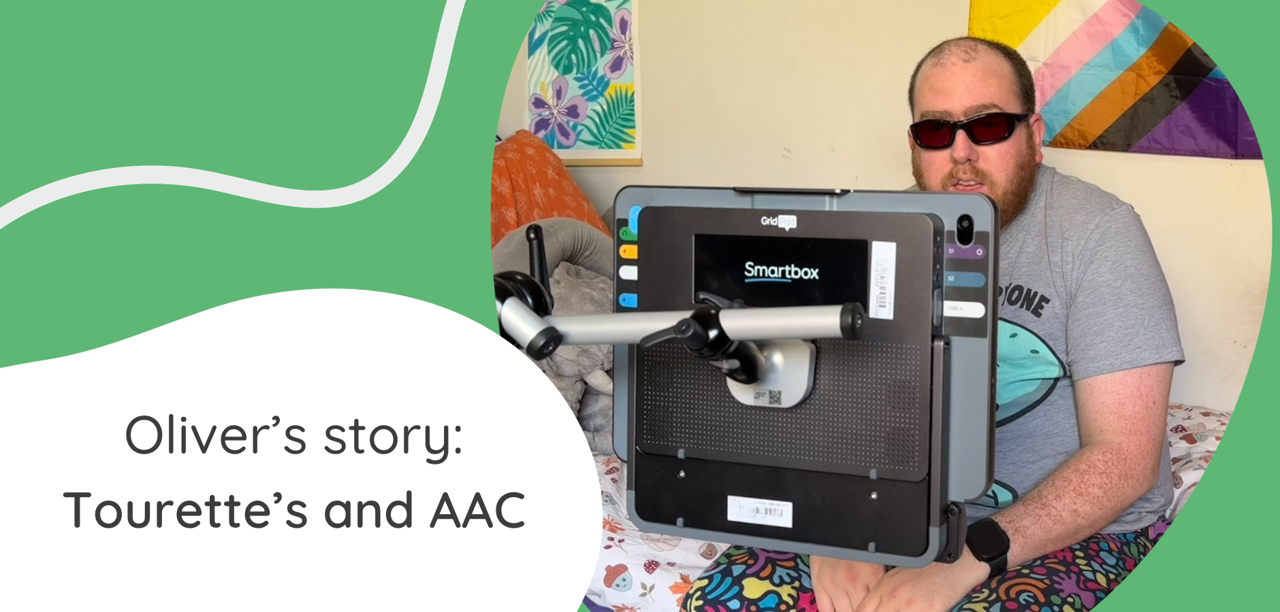
Oliver’s story: Tourette’s and AAC
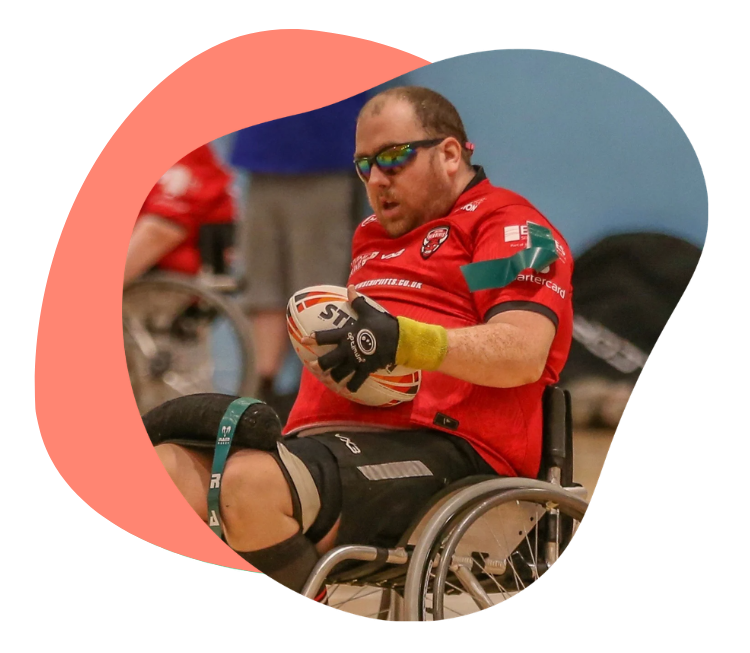
Oliver is an AAC user, wheelchair rugby league player and history graduate from the UK. He uses AAC full time and recently started using eye gaze with his Grid Pad 13 and Evo eye tracker.
Oliver identifies as an asexual, non-binary trans man and shares openly online about disability, communication, mental health and inclusion. Oliver is autistic and has Tourette’s, schizoaffective disorder (bipolar type), alongside other disabilities.
In this interview, Oliver shares his AAC journey, his experiences using eye gaze and Grid, and the role communication and community have played in his life.
.
Can you tell us about your communication journey and what led you to AAC?
I have struggled with using verbal speech for as long as I can remember, preferring to write things down, and I had selective/situational mutism when younger.
As my tics started to get more severe and impact me more, I started to have more and more periods with zero voluntary speech. As things progressed, I looked into AAC. I didn’t know what AAC was until I opened up on social media about my various speech difficulties and this opened up the world of AAC for me.
I now also use AAC full time due to my autism and the schizophrenia part of my schizoaffective disorder.
How have your AAC access methods changed over time?
When I first started to use electronic AAC, I was typing with touch. This was when I wasn’t using AAC full time.
I started to use AAC full time from around 2020. This meant that I was always typing and this, alongside the chronic pain I have due to Tourette’s, meant that I was getting severe pain due to the typing and tics. I was then reducing the amount I was communicating because of the pain.
I first started to use eye gaze when I was awarded an eye gaze device for university through Disabled Students Allowance. This was used for studying and writing essays.
When I started to reduce communication due to pain I got referred back to the ACE Centre. This was when I was assessed to have the Grid Pad eye gaze device. Prior to this referral, I had been using the Grid Pad 10s. Although I now primarily use eye gaze to access my device, I can still use some minimal touch access.
look at each competency and bring them to life through practical examples and stories from AAC users.
.png)
“AAC is a major part of my everyday life, but often it is the little things. I can now order in restaurants. I am more chatty in general. What I say now makes more sense to others. And yes it is frustrating when others ignore me, but I much prefer AAC communication.”
Oliver, Grid user
What has your experience been like using Grid?
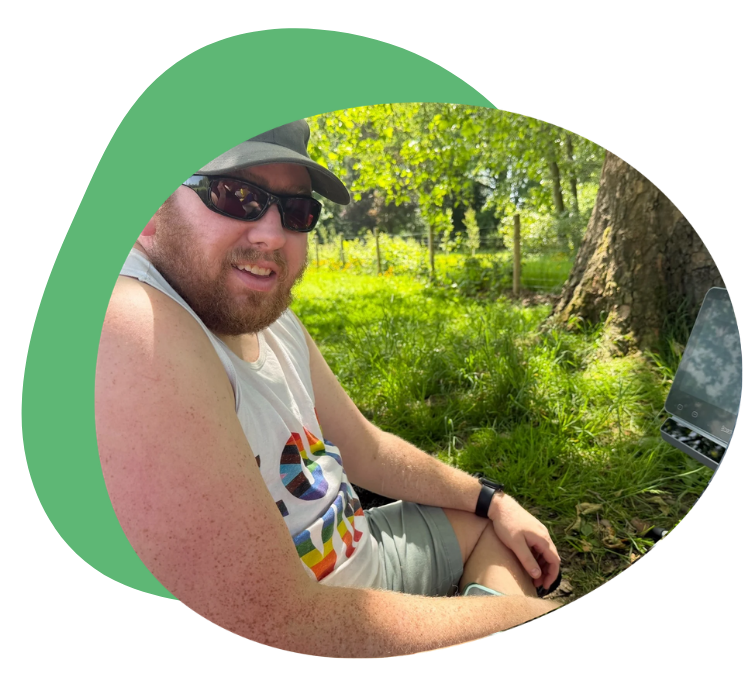
I got my first Grid device, the Grid Pad 10s, a few years ago and now I have had the Grid Pad 13 for a few weeks.
Some of the best features I use are Chat Switcher, the attention bell, and the second screen, which are incredibly useful for me and helpful for communication with my friends who are all neurodivergent. With people who have auditory processing difficulties, having the second screen can make communication easier, as they can read and listen at the same time. It means I don’t have to repeat myself as often. The second screen (or, as I call it, my very own subtitles) is also really helpful when I’m out and about, especially in noisy places like restaurants, or at medical appointments where it allows doctors and therapists to see what I’m saying as well as hear it.
I also love how I can easily switch between typing words and symbol AAC, and I find the Smart Buttons on my Grid Pad super helpful. I have them set up for going to Grid Explorer, the positioning guide and pausing eye tracking, alongside the fixed volume buttons. I love how the Smart Buttons can be personalised in terms of function, colour and sound. It is great to have access to these quick options.
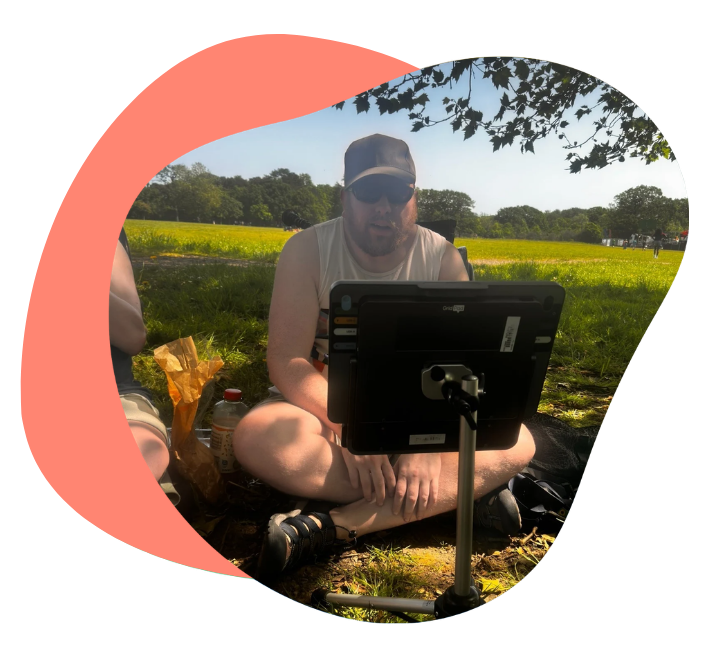
What has your experience been like using our Evo eye tracker?
I have been using the Evo eye tracker for a few weeks now. It is brilliant how it works so well, even with my tinted Irlen glasses. And the fact that it never seems to be confused by my head, facial and neck motor tics.
It is only the second eye tracker that I have used. However, with Evo, I have been able to use it really smoothly from the start. Obviously it helps that I have used eye gaze before, but the ease and accuracy of Evo far surpasses the other eye gaze options I have used.
What advice would you give to someone new to AAC or eye gaze?
When new to AAC it can be really overwhelming and difficult to know what is best for you. I found that talking to other AAC users was very helpful. They could recommend different apps and devices, and we could share ideas and tips with each other. Having this community really helped me to feel less alone too.
When starting out with eye gaze, I recommend practicing little and often. Using eye gaze can be really overwhelming and draining, especially at first – both physically and mentally. It can be frustrating too when first using eye gaze. It can be slow and hard work.
A few suggestions from me:
Practice with simple games that often come with the device.
Make sure your set up and positioning are right.
Take regular breaks and rest your eyes. Even just shutting your eyes for a minute can help.
Read more from Oliver
In our other interviews with Oliver, he shares more about living with Tourette’s, disability and neurodivergence. You can also learn more about Oliver in his blogs and poems on The Tudors make me tic.