
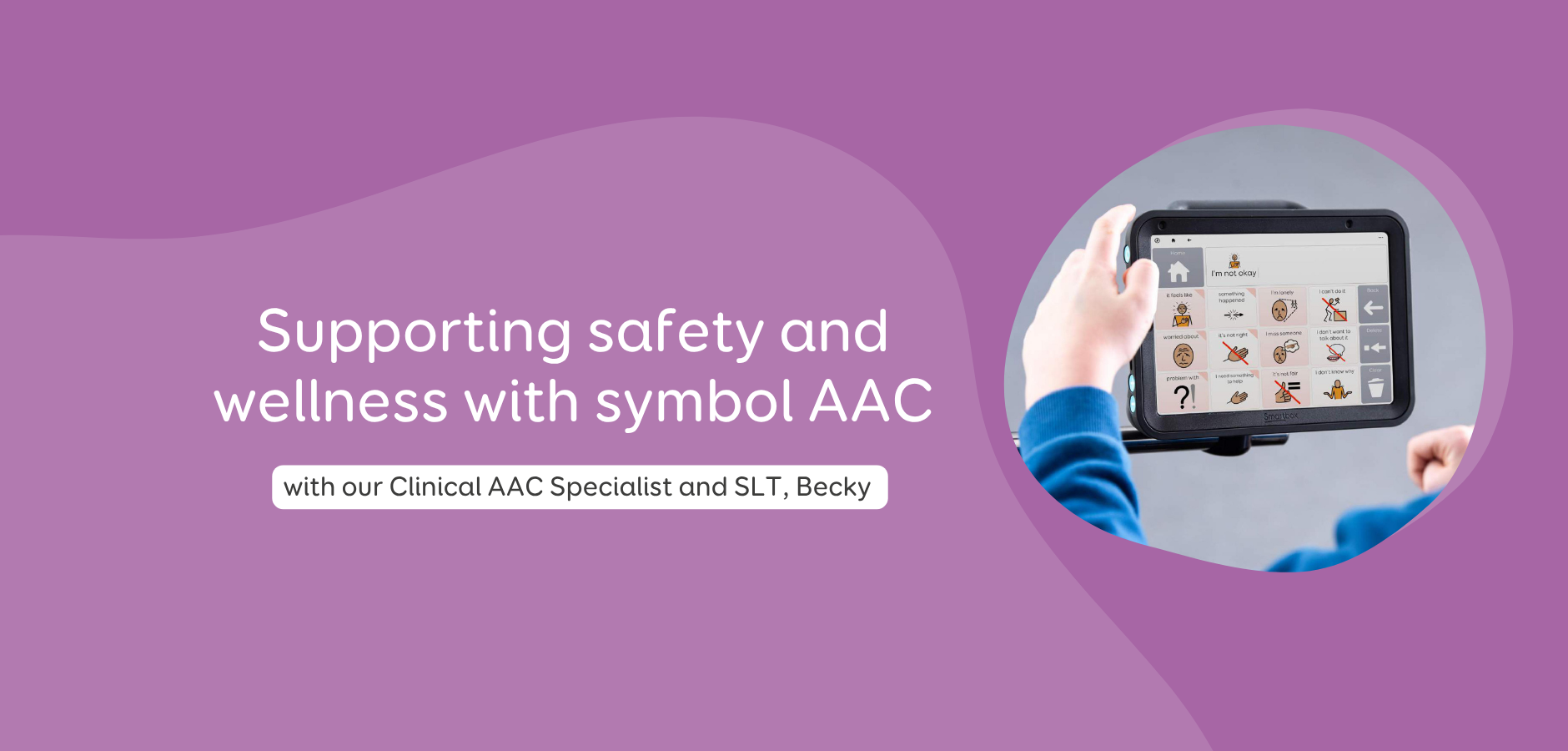
Supporting safety and wellness with symbol AAC
As AAC professionals, families, and allies, we often talk about access – to vocabulary, to communication, to independence. But access isn’t just about chatting, learning, or making choices. It’s also about safety, self-expression, and being able to name what matters.
In this blog, our Clinical AAC Specialist, Becky, shares why safeguarding language belongs in every vocabulary. She explores recent updates to our symbol-based vocabulary, Super Core, practical ways to model new language, and what it really means to create space for self-advocacy in AAC.
Words are powerful. Language can be expressive, but also essential for self-advocacy and protection. And everyone deserves access to the words they need.
That’s why our latest Super Core vocabulary update includes new and clearer access to language around bodies, relationships and consent, because words are more than tools for communication – they can be essential for enabling autonomy and ensuring personal safety.
 This topic came up for me recently when my daughter’s friend, who lives with a long-term medical condition, needed to understand words for different parts of her body far earlier and in more detail than many children her age would. She needs those words to talk about her body and her health, and this will be true for many people who use AAC and have co-occurring medical conditions.
Super Core now goes even further in supporting access to the language that helps people who use AAC to stay safe, understand themselves, and advocate for their needs. Because vocabulary doesn’t just shape how someone communicates, it shapes how they experience and navigate the world around them.
Why these words matter
If someone doesn’t have the language to talk about their body, their boundaries, or what makes them feel unsafe, they’re more vulnerable. That’s especially true for AAC users, who rely on communication systems to share their thoughts, needs and warnings. It’s about enabling them to be seen and be heard, on their own terms.
What’s new in Super Core?
We’ve made a number of targeted updates to Super Core to improve access to safety and wellness-related language:
Better access to vocabulary for genitals (Child and Teen and Adult vocabularies)
Having easy access to words to refer to your genitals is essential for talking and learning about your body, learning about boundaries, and keeping safe.
Found in: Topics > Body > Privates
Improved layout of sex and sexual health grids (Teen and Adult vocabularies)
Includes clearer language around consent, relationships and wellness, with more consistent grid organisation to support motor planning.
Found in: Topics > Relationships > Sex and Topics > Health > Sexual Health
A new safety and wellness grid set
We have also created a dedicated safety and wellness grid set, designed to give you access to vocabulary that supports conversations about wellbeing, personal safety, and boundaries. You can find and add this grid set from Online Grids in Grid here.
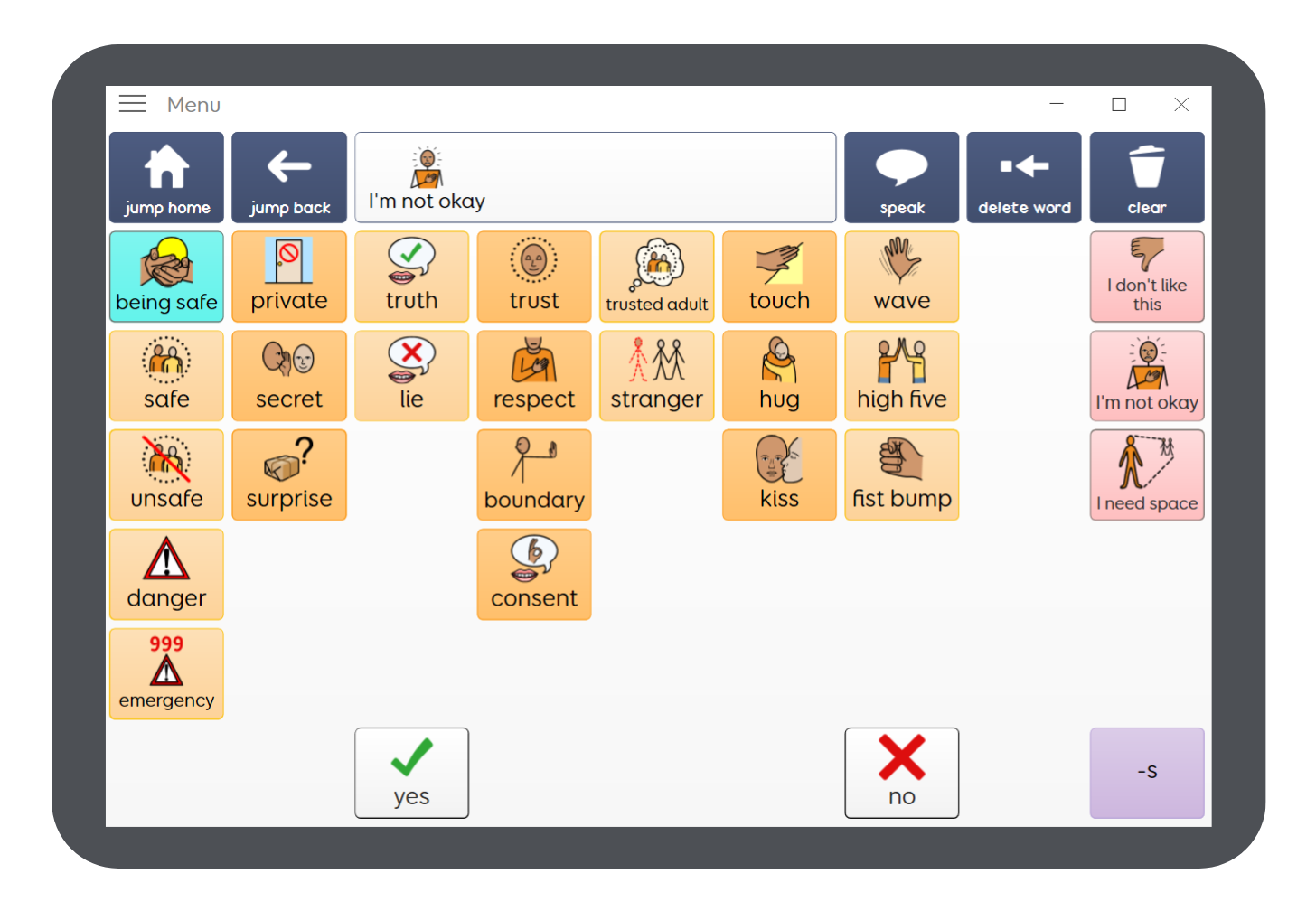
These updates and improvements are part of our commitment to helping people talk about what matters most, safely, confidently, and in their own voice.
It’s about more than just access
Adding the words is just the first step. Learning how to use them is what makes language powerful.
Everyone learns language through exposure, exploration and experience. AAC users are no different. That’s why it’s important we model and reinforce this language in real life.
Here are some simple ways you could support this:
- Model in context: use new words during everyday routines, such as washing, dressing, pretend play, and conversations.
- Pair with body language or visuals: connect terms with gestures, expressions, or real-life items.
- Encourage curiosity: let people who use AAC ask questions about the words they see.
- Revisit and repeat: just like with speech, repetition helps understanding.
- Personalise it: add relevant people, routines or needs to their system.
And remember, language isn’t always learned all at once, and that’s OK. Some children won’t need certain terms until much later, while others will need them early on. It’s all about making sure the words are there when they’re needed.
How to add the new words
The updated Super Core content, including the updated Body and Genitals pages and reorganised Sex and Sexual Health content is available now in Grid 3 and Grid for iPad. You will just need to make sure you’re running Grid version 99 or above to access the latest content.
To add the new safety and wellness grid set, you’ll need to:
- From Grid Explorer, go to Menu > Add Grid Set > Online Grids and search for ‘Safety and Wellness grid set.’ Here’s some instructions for how you can add and share grid sets using Online Grids, in Grid 3 and Grid for iPad.
- Once this appears in your Grid Explorer, you can add the grid to your main Super Core grid set by following these instructions for Grid 3 or Grid for iPad. Don’t forget to create a jump to your new grid!
Here’s some support on how to make a jump cell, to link one page to another in Grid 3 or Grid for iPad. If you need further support, please reach out to our friendly team on (03) 9696 2944 or [email protected].
Final thoughts
At Smartbox, we believe that communication is a human right. That includes the right to say yes. To say no. To ask why. To talk about your body, your relationships, your safety, and your wellbeing.
These aren’t just words. These are the words that matter most.
Find out more
Learn more about the latest Super Core updates and changes to adult symbols in Grid.